
≥99%
258818-34-7
1017.09 g/mol
Larazotide
A synthetic peptide studied for tight junction modulation and intestinal permeability research.
1 vial × $110 each
Add 3+ to unlock
volume pricing
Pay by Zelle or PayPal · no processing fees · ships once payment clears
Free US shipping on orders over $200, with tracking provided.
Third-party tested
Supplied to qualified labs and institutional buyers. Institutional use & buyer eligibility
Characteristics
| Property | Value |
|---|---|
| Molecular Formula | C₄₁H₆₅N₁₁O₁₅S₂ |
| CAS Number | 258818-34-7 |
| Molar Mass | 1017.09 g/mol |
| Amino Acid Sequence | Gly-Gly-Val-Leu-Val-Gln-Pro-Gly (octapeptide) |
| Synonyms | Larazotide acetate, AT-1001, INN-202 |
| Physical Form | Lyophilized powder |
| Solubility | Soluble in water and aqueous buffers |
| Organoleptic Profile | White to off-white lyophilized powder; odorless |
| Purity | ≥97% by HPLC |
| Storage Conditions | Store lyophilized at -20°C; reconstituted solution stable at 2-8°C for up to 7 days |
How is Larazotide Used in Research?
Larazotide (AT-1001) is a synthetic octapeptide derived from the Vibrio cholerae zonula occludens toxin (Zot) that functions as a tight junction regulator. It was developed by Fasano and colleagues at the University of Maryland Center for Celiac Research as an oral research approach for celiac disease models and other conditions involving increased intestinal permeability. Larazotide acts locally in the gut lumen to prevent the disassembly of tight junction proteins, thereby reducing paracellular permeability — the passage of molecules and immune triggers between intestinal epithelial cells.
The mechanism of larazotide involves antagonism of the zonulin pathway. Zonulin is an endogenous human protein (identified as pre-haptoglobin-2) that reversibly modulates intestinal tight junctions by activating epidermal growth factor receptor (EGFR) and protease-activated receptor 2 (PAR2) signaling. In celiac disease, gluten-derived peptides trigger zonulin release, leading to increased intestinal permeability that allows immunogenic gluten fragments to access the lamina propria and activate immune responses. Larazotide blocks this process at the tight junction level.
Multiple Phase 2 research studies have evaluated larazotide acetate in research subjects with celiac disease on a gluten-free diet, with results showing reductions in intestinal permeability and improvements in gastrointestinal endpoints. The peptide has advanced to Phase 3 research evaluation. Because larazotide acts locally in the intestinal lumen with minimal systemic absorption, it has demonstrated a favorable profile in research studies. Research interest extends to other preclinical models associated with barrier-dysfunction markers, including inflammatory-bowel and irritable-bowel research models.
This product is supplied in a lyophilized form and requires reconstitution prior to laboratory handling. For research and laboratory use only. Not for human or veterinary consumption.
Areas of Study
Gut Barrier Integrity
Prevents tight junction disassembly in intestinal epithelium, reducing paracellular permeability to immunogenic molecules and dietary antigens.
Tight Junction Modulation
Acts locally in the gut lumen to stabilize tight junction protein complexes including ZO-1, occludin, and claudins.
Intestinal Permeability
Preclinical studies demonstrate reduction of zonulin-mediated intestinal permeability through tight junction modulation.
Zonulin Pathway
Antagonizes zonulin-mediated EGFR/PAR2 signaling that triggers tight junction disassembly in response to gluten exposure.
Zonulin Pathway
Investigated as a zonulin receptor antagonist for modulating paracellular permeability in intestinal epithelial models.
References
- [1]Fasano A. (2012). Zonulin, regulation of tight junctions, and autoimmune diseases. Annals of the New York Academy of Sciences, 1258(1), 25-33.
- [2]Leffler DA, Kelly CP, Abdallah HZ, et al. (2012). A randomized, double-blind study of larazotide acetate to prevent the activation of celiac disease during gluten challenge. American Journal of Gastroenterology, 107(10), 1554-1562.
- [3]Paterson BM, Lammers KM, Arrieta MC, et al. (2007). The safety, tolerance, pharmacokinetic and pharmacodynamic effects of single doses of AT-1001 in coeliac disease subjects. Alimentary Pharmacology & Therapeutics, 26(5), 757-766.
- [4]Gopalakrishnan S, Tripathi A, Tamiz AP, et al. (2012). Larazotide acetate promotes tight junction assembly in epithelial cells. Peptides, 35(1), 95-101.
Disclaimer: The information provided is for research reference only and does not constitute medical advice. Products are sold strictly for in-vitro research use.
Certificate of Analysis (COA)
Third-Party Verified Quality
Every batch of Larazotideis independently tested by an A2LA-accredited (ISO 17025:2017) third-party laboratory using HPLC-UV/VIS for purity and measured quantity. Each COA carries the lab's signed report and a batch-specific lot number. We publish these results publicly so you can verify exactly what you're getting.
View Lab ResultsRelated Products
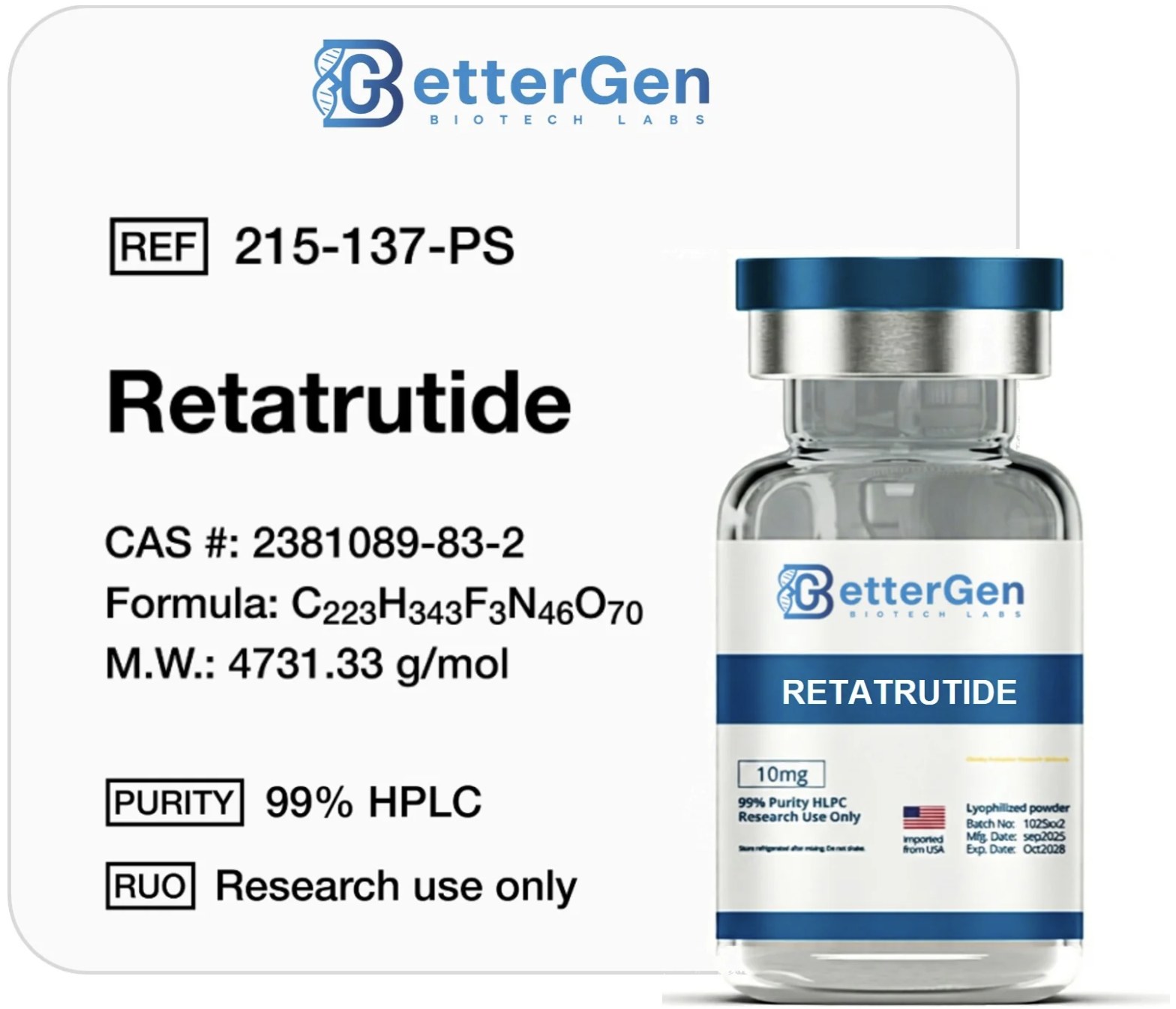
GLP3R
10mg – 60mg
Triple-agonist research peptide targeting GIP, GLP-1, and glucagon receptors in preclinical metabolic studies.
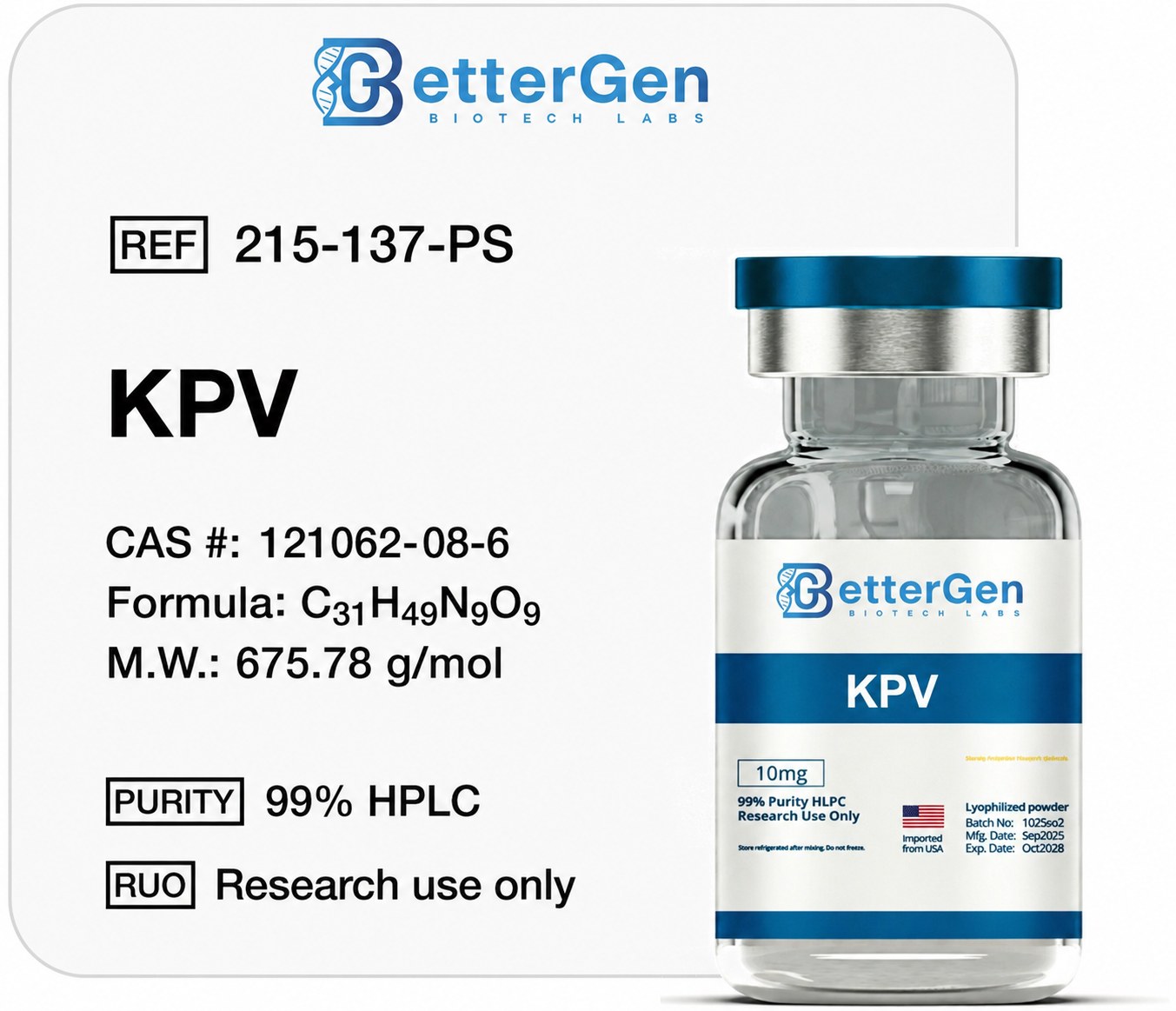
KPV
10mg
A synthetic tripeptide fragment derived from alpha-MSH studied for immune-signaling and inflammatory-marker modulation in preclinical studies.
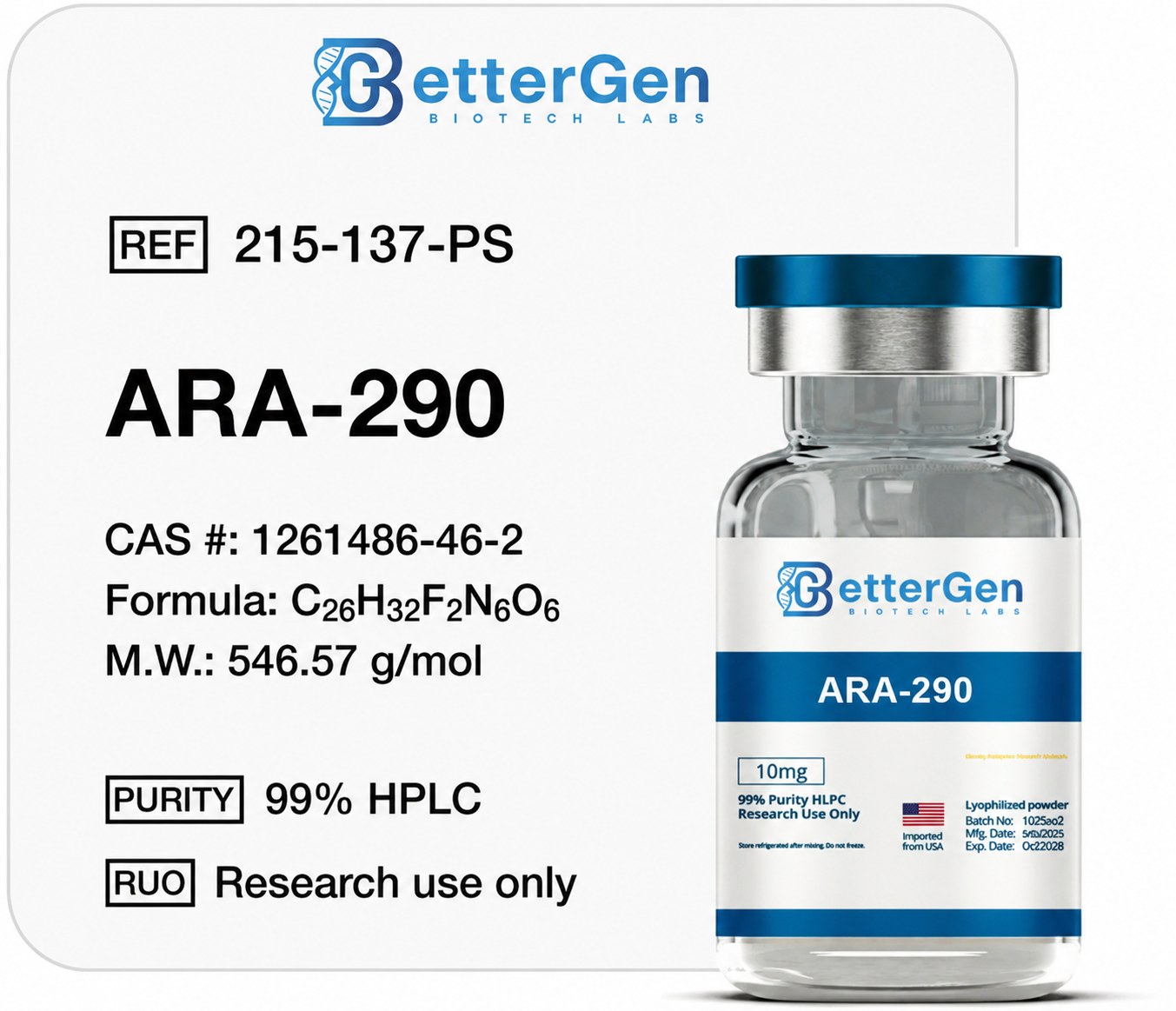
ARA-290
10mg
ARA-290 is an 11-amino acid synthetic peptide derived from erythropoietin supplied as a lyophilized research standard for in-vitro receptor-binding assays and structural characterization. Not for use in any living organism.
Frequently Bought Together
Larazotide
10mg
$110
GLP3R
10mg
$180
KPV
10mg
$180
Bundle total
$470