
≥99%
Pentadecarginine
A BPC-157 analog in arginine salt form studied for enhanced solubility and in-vitro stability in research formulations.
1 vial × $110 each
Add 3+ to unlock
volume pricing
Pay by Zelle or PayPal · no processing fees · ships once payment clears
Free US shipping on orders over $200, with tracking provided.
Third-party tested
Supplied to qualified labs and institutional buyers. Institutional use & buyer eligibility
Characteristics
| Property | Value |
|---|---|
| Molecular Formula | C₆₂H₉₈N₁₆O₂₂ (peptide) + C₆H₁₄N₄O₂ (arginine salt) |
| CAS Number | Not yet assigned (novel arginine salt form) |
| Molar Mass | ~1593.7 g/mol (peptide + arginine counter-ion) |
| Amino Acid Sequence | Gly-Glu-Pro-Pro-Pro-Gly-Lys-Pro-Ala-Asp-Asp-Ala-Gly-Leu-Val (BPC-157 core) |
| Synonyms | BPC-157 Arginine Salt, BPC-157-Arg, Pentadecarginine |
| Physical Form | Lyophilized powder |
| Solubility | Freely soluble in water; enhanced solubility compared to acetate salt |
| Organoleptic Profile | White to off-white lyophilized powder; odorless |
| Storage Conditions | Store lyophilized at -20°C; reconstituted solution stable at 2-8°C for up to 14 days |
| Composition | Lyophilized BPC-157 with L-arginine counter-ion |
How is Pentadecarginine Used in Research?
Pentadecarginine is an arginine salt formulation of BPC-157, the well-studied body protection compound pentadecapeptide. By pairing the BPC-157 peptide with an L-arginine counter-ion rather than the traditional acetate salt, this formulation is designed to enhance aqueous solubility and in-vitro stability. L-arginine itself serves as a precursor to nitric oxide (NO) via the nitric oxide synthase pathway, and since BPC-157's mechanism of action is known to involve NO system modulation, the arginine salt form may offer complementary NO-substrate availability in preclinical assays.
The core peptide retains the same 15-amino acid sequence as standard BPC-157, and therefore the extensive preclinical literature supporting BPC-157's activity in in-vitro wound-assay outcomes, GI epithelial cell models, and tissue-repair research models is directly applicable. Preclinical research on BPC-157 has characterized its in-vitro endothelial tube-formation (angiogenic) assay activity via VEGF upregulation, tendon and ligament tissue-repair research models studied in collagen/ECM assay models, and neuroprotective assay model activity through modulation of dopaminergic pathways. The arginine salt formulation represents a pharmaceutical chemistry optimization rather than a novel peptide entity.
The rationale for arginine salt formulation draws on research demonstrating that counter-ion selection can significantly influence peptide stability, solubility, and research-formulation characteristics. Arginine-based salt forms have been explored across pharmaceutical chemistry for their favorable pH-buffering properties and their role in NO-related research pathways.
This product is supplied in a lyophilized form and requires reconstitution prior to laboratory handling. For research and laboratory use only. Not for human or veterinary consumption.
Areas of Study
Enhanced Solubility Research
Investigated as an alternative salt form to improve aqueous solubility and in-vitro stability compared to the standard acetate salt.
Nitric Oxide System Modulation
The arginine counter-ion provides additional NO-precursor substrate in preclinical assays, complementing BPC-157's known NO-pathway interactions.
Tissue-Repair Research Models
Retains the full BPC-157 peptide sequence, with applicable preclinical evidence in in-vitro wound-assay outcomes and cell-migration kinetics in musculoskeletal and soft-tissue research models.
Gastrointestinal Protection
The core BPC-157 peptide is extensively studied for cytoprotection in GI epithelial cell models against NSAID-, alcohol-, and cytotoxin-induced lesion markers.
Pharmaceutical Formulation Science
Studied in the context of counter-ion optimization for peptide research compounds, where salt-form selection affects stability, solubility, and shelf life.
References
- [1]Sikiric P, Seiwerth S, Rucman R, et al. (2018). Stable gastric pentadecapeptide BPC 157: novel therapy in gastrointestinal tract. Current Pharmaceutical Design, 24(18), 1990-2001.
- [2]Sikiric P, Seiwerth S, Rucman R, et al. (2014). Stable gastric pentadecapeptide BPC 157-NO-system relation. Current Pharmaceutical Design, 20(7), 1126-1135.
- [3]Stout E, McKessor A. (2012). Glycine-arginine salt effects on peptide solubility and stability in pharmaceutical formulations. International Journal of Pharmaceutics, 438(1-2), 16-23.
- [4]Cerovecki T, Bojanic I, Brcic L, et al. (2010). Pentadecapeptide BPC 157 (PL 14736) improves ligament healing in the rat. Journal of Orthopaedic Research, 28(9), 1155-1161.
Disclaimer: The information provided is for research reference only and does not constitute medical advice. Products are sold strictly for in-vitro research use.
Certificate of Analysis (COA)
Third-Party Verified Quality
Every batch of Pentadecarginineis independently tested by an A2LA-accredited (ISO 17025:2017) third-party laboratory using HPLC-UV/VIS for purity and measured quantity. Each COA carries the lab's signed report and a batch-specific lot number. We publish these results publicly so you can verify exactly what you're getting.
View Lab ResultsRelated Products
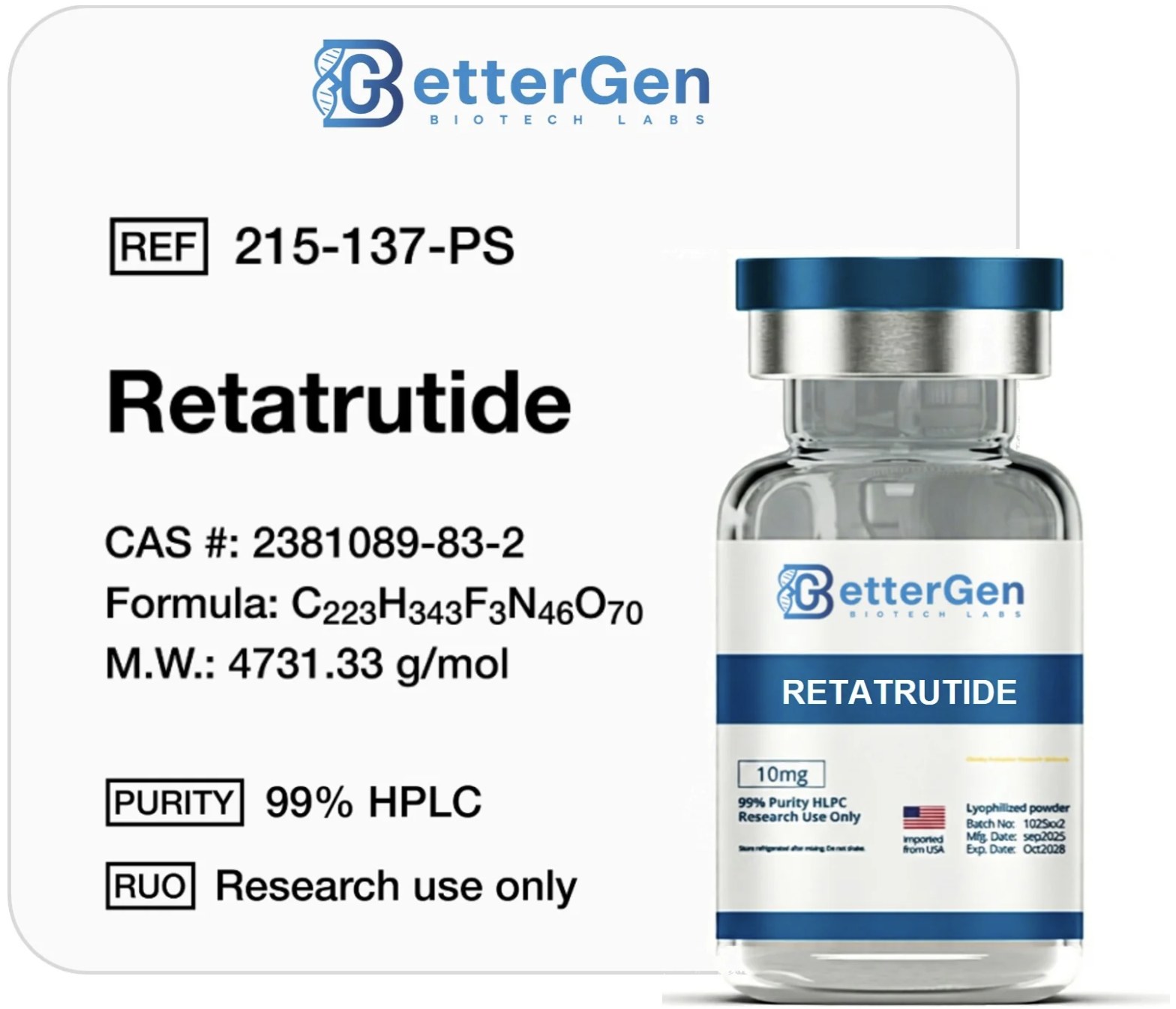
GLP3R
10mg – 60mg
Triple-agonist research peptide targeting GIP, GLP-1, and glucagon receptors in preclinical metabolic studies.
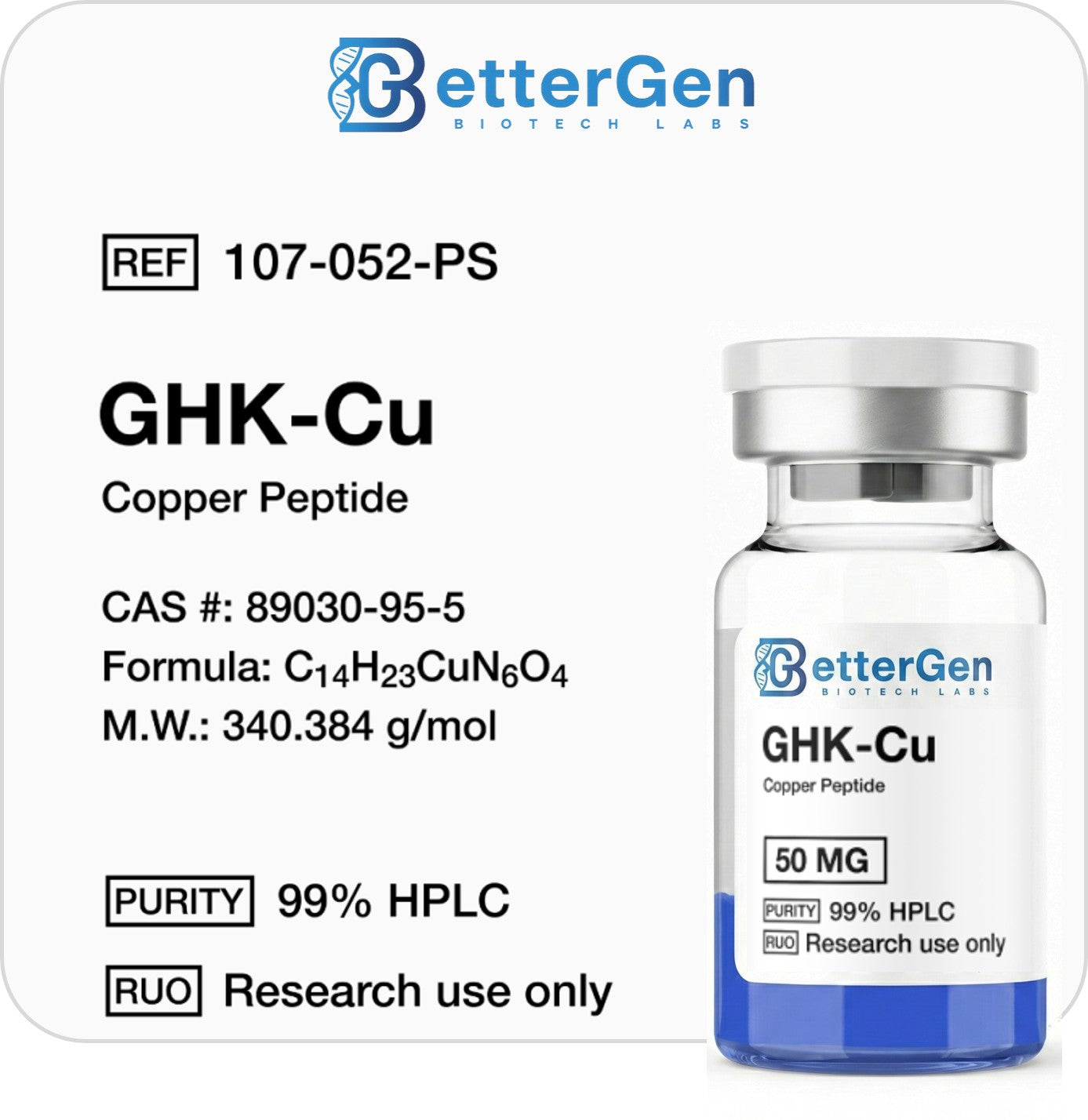
GHK-Cu 50mg Copper Peptide
50mg
GHK-Cu is a natural peptide in human blood plasma, urine, and saliva. Research in animals reveals that GHK-Cu can improve wound healing, immune function, and skin health by stimulating collagen, fibroblasts and promoting blood vessel...
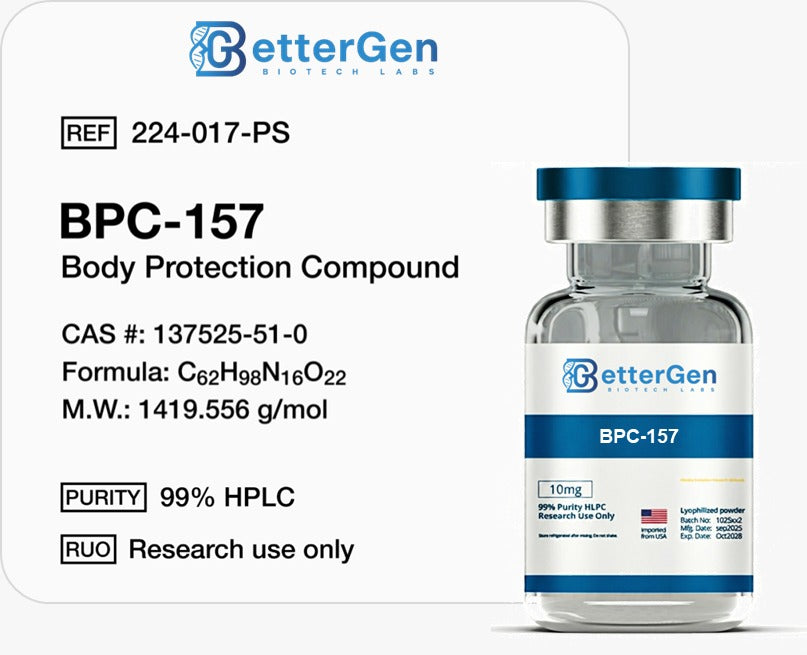
BPC-157
1 vial
BPC-157 is a penta-decapeptide composed of 15 amino acids. It is a partial sequence of the body protection compound (BPC) that was discovered in and isolated from human gastric juice. Animal studies have shown it to accelerate the healing...
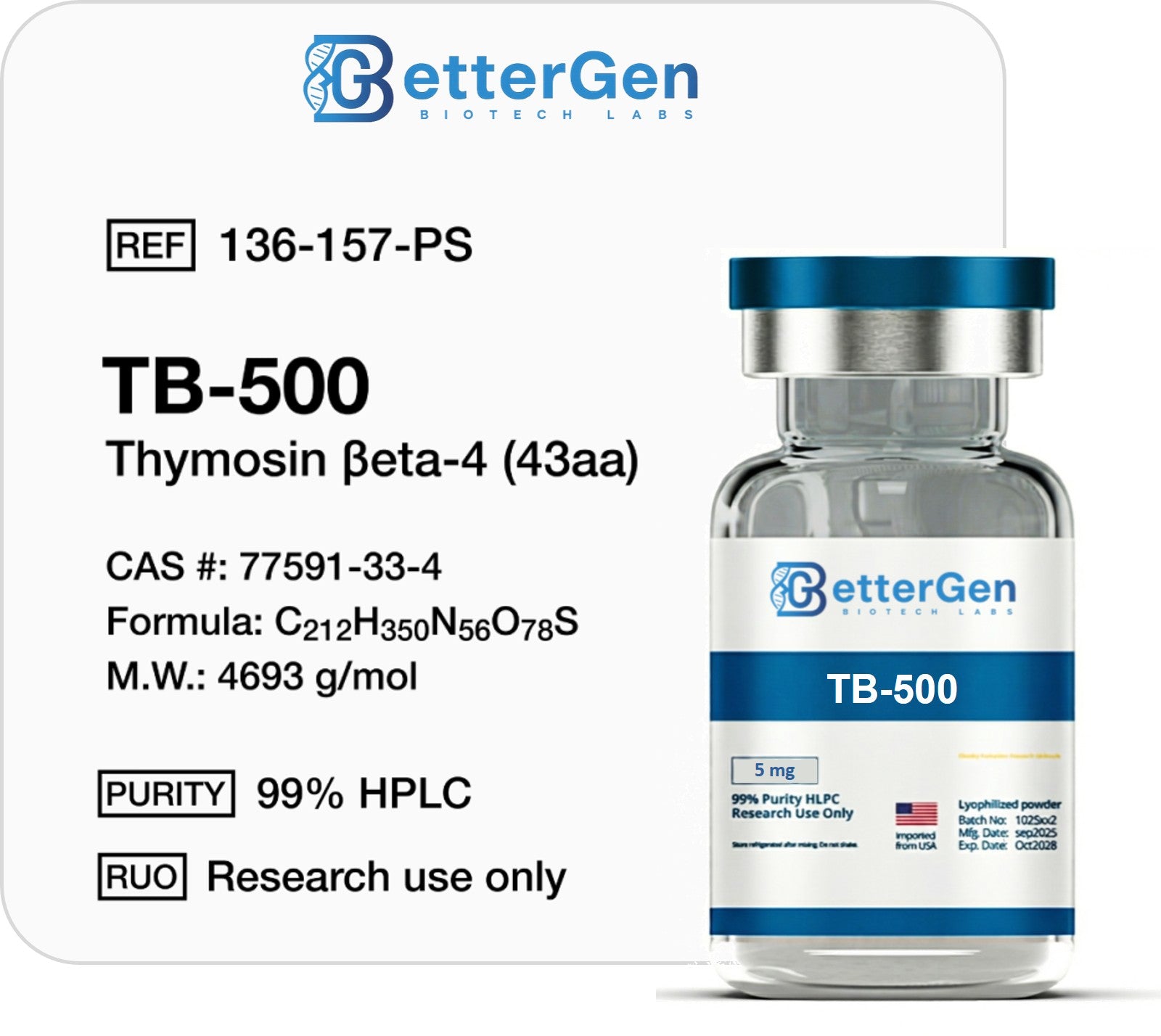
TB-500 (Thymosin Beta-4) (43aa)
1 vial
TB-500 (Thymosin Beta-4) is a 43 amino acid peptide sequence. In animal models, Thymosin Beta-4 has been shown to improve blood vessel growth, regulate wound healing, decrease inflammation, and reduce oxidative damage in the heart and...
Frequently Bought Together
Pentadecarginine
5mg
$110
GLP3R
10mg
$180
GHK-Cu 50mg Copper Peptide
50mg
$135
Bundle total
$425